When to start eating at a dinner party or restaurant
 Ray Fong · Updated November 4, 2026
If there is a host, wait until the host picks up their fork or says “Please, go ahead.” If there is no host, wait until everyone at the table has been served. At a large table or banquet, you may start once the people around you have their food or when someone urges you to begin. If you’re served last, say “Please, don’t wait for me.”
Ray explains it in under two minutes.
An old club manager in Boston once told me he could tell who grew up with manners before anyone said a word. He didn’t listen to the conversation. He watched what people did in the first second after the food arrived.
The plate lands, it smells wonderful, and some forks are already moving. Others stay still. He said that one second told him more than a résumé.
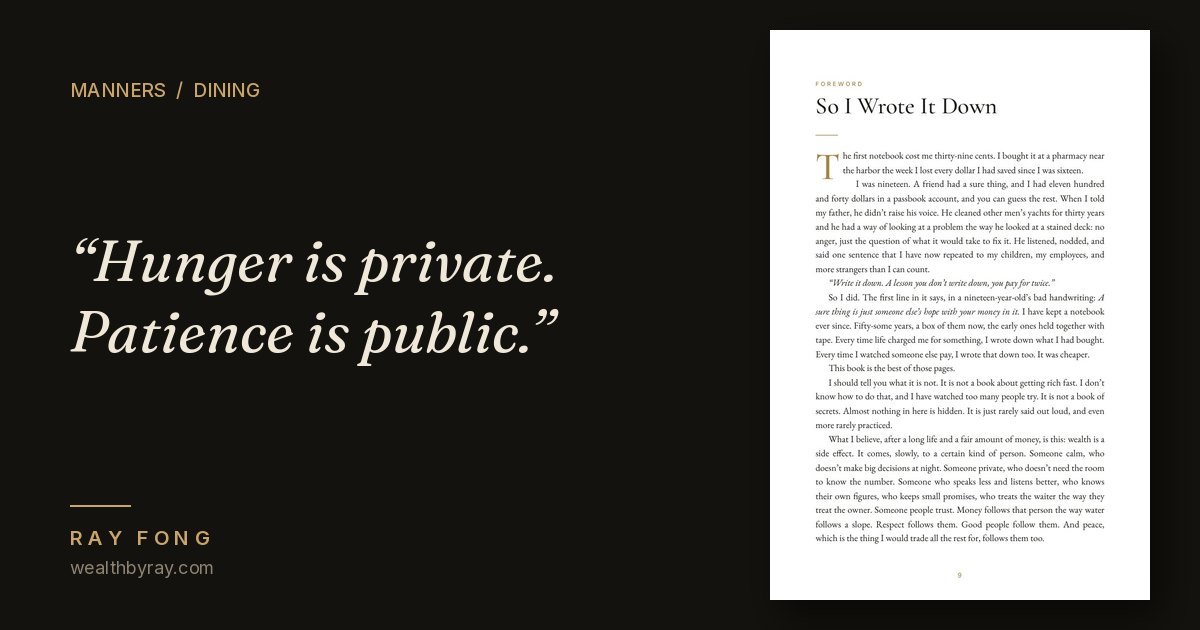
Hunger is private. Patience is public.
The rule, situation by situation
- Dinner at someone’s home: wait for the host to sit down and lift their fork, or to say “please, start.” The Emily Post Institute calls the host’s first bite the cue that it’s fine to begin.
- Restaurant with a host (someone invited you): the same. Watch your host, not your plate.
- Restaurant, no host, small table: wait until the last person has been served, even if your food is getting cold.
- Large table, banquet or wedding: once the people on either side of you have been served, you may begin. Waiting for forty plates helps no one.
- Buffet: start when you sit down, or when a few others have joined you at the table.
- Business meal: wait for everyone to be served or for your host to begin. A client dinner is not the place to be first.
- Someone’s dish is badly delayed: it’s their place, or the host’s, to say “please start, don’t let it get cold.” Then you may.
If you’re the one served last
Do the gracious thing before anyone has to wait for you: look around and say, “Please, don’t wait for me.” Now everyone can eat, and you’re the person who made the table comfortable. If you’re the host, say “Please, start while it’s hot.”
What to do while you wait
- Napkin on your lap as soon as you sit.
- Hands in your lap or resting lightly at the edge of the table.
- A sip of water, if you like.
- Keep talking to the person next to you. The pause should look natural, not like you’re guarding your plate.
- Phone out of sight. Waiting is not an invitation to scroll.
Why such a small thing matters
A forty-dollar steak tastes the same two minutes later. Your reputation doesn’t. Starting early isn’t a crime, but it tells everyone what you were thinking about: yourself. Waiting tells them you were raised around people who noticed others. That pause costs nothing, and it is one of the first things a host, a client or a future father-in-law will see.
Customs differ around the world: in Korea, for example, the eldest at the table traditionally begins the meal. When you’re a guest in another culture, watch your host and follow them.
The same quiet rules apply all evening, right up to who pays when someone invites you to dinner.
The Quiet Rules
Ray’s free book: the small rules that let you sit at any table and look like you belong.
Read it free →Questions people ask
Should you wait for everyone to be served before eating?
Yes, at a small table. If there's a host, wait for them to start or to say 'please go ahead.' At large tables you may begin once those around you are served.
Is it rude to start eating before the host?
Yes. The host's first bite, or their invitation to begin, is the signal. Starting before it suggests you were thinking about your food rather than the table.
What do you say if your food comes last?
'Please, don't wait for me.' It lets everyone eat while their food is hot and shows consideration.
When can you start eating at a wedding or banquet?
Once the people on either side of you have been served, or when the host or table encourages everyone to begin.
When can you start eating at a business dinner?
When everyone has been served or when the host starts. At a client dinner, never be the first to eat.
General education, not financial, legal or tax advice. Rules vary by state and country; speak with a licensed professional about your situation. About Ray.