The waiter rule: what how you treat a waiter says about you
 Ray Fong · Updated November 1, 2026
How you treat a waiter shows how you treat anyone who can’t do anything for you, and people read it as a preview of how you’ll treat them once you no longer need them. It’s known as the waiter rule. The good habits are small: look up when they come to the table, use their name, say thank you every time, put the phone away while they speak, and be patient when something goes wrong.
The most important person at a business dinner is the waiter. Not because of the food. Because the man across the table is watching how you treat him.
You think the meeting is the conversation, the pitch, the numbers. It isn’t. He decided about you before dessert.
What the waiter rule is
The idea is old, but it became famous in 2006 when Raytheon’s chief executive, Bill Swanson, put it in a booklet of management rules: a person who is nice to you but rude to the waiter is not a nice person. Many executives said they use some version of it when hiring, and some take candidates to lunch for exactly this reason.
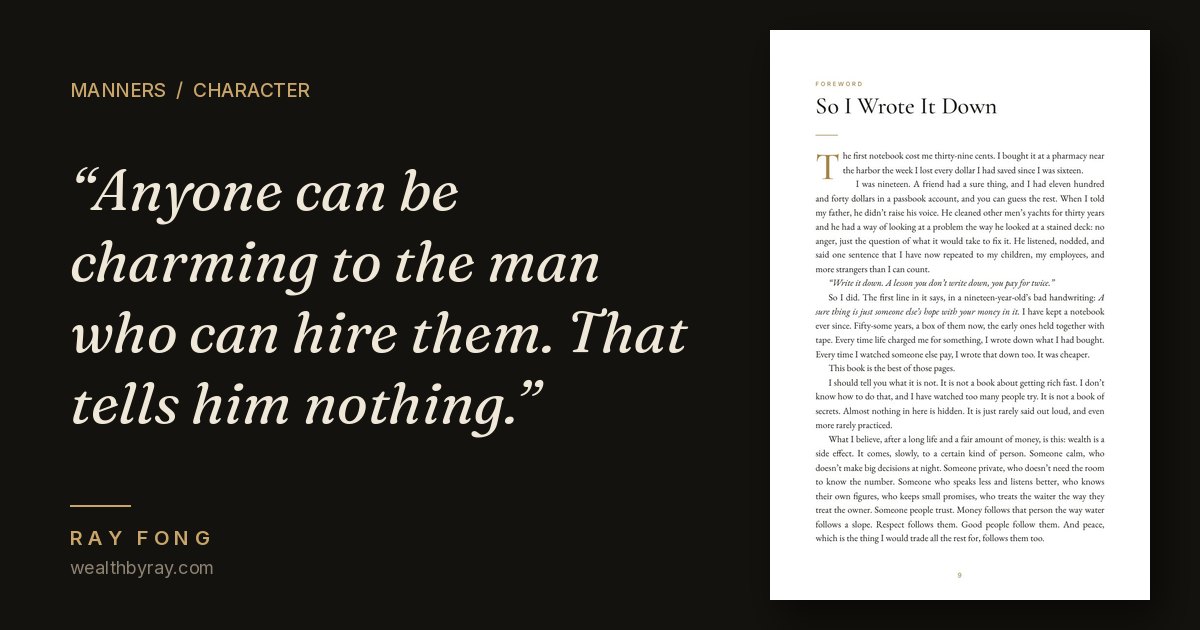
The logic is simple. Anyone can be charming to the man who can hire them. That tells you nothing. How someone treats a person with no power over them tells you everything, because that is how they’ll treat your people when you’re not in the room.
Anyone can be charming to the man who can hire them. That tells him nothing.
What people notice at the table
- Do you look up when the water comes, or keep talking as if nobody is there?
- Do you learn their name and use it once?
- Do you say thank you, every time, not only for the main course?
- Is your phone in your hand while they’re still talking?
- How do you handle a mistake? A wrong dish is the real test. Calm and kind, or a performance?
- Do you snap your fingers, wave or call out? Eye contact and a small raised hand are enough.
- How do you tip, and do you make a show of it?
What to do instead
- Greet them like a person: “Good evening, how’s your night going?”
- Ask their name if they don’t give it, and use it once, warmly, not repeatedly.
- Put the phone face down for the whole meal. It’s one of the small actions in my book’s 30-day notebook.
- When something is wrong, make it easy for them: “No rush at all, but I think this might be the other table’s.”
- Thank them on the way out, and tip well and quietly.
It works in both directions
Use the rule on others too. When someone is sweet to you and short with the waiter, believe the waiter. It is one of the most reliable tests of character you’ll ever get for the price of a lunch. For more small rules like this one, read 20 habits of classy people.
The Quiet Rules
Ray’s free book of the small rules most people are never taught out loud.
Read it free →Questions people ask
What is the waiter rule?
The waiter rule says that a person who is nice to you but rude to a waiter is not a nice person. It was made famous in 2006 by Raytheon CEO Bill Swanson, and many executives use it when judging character.
Why do people judge you by how you treat a waiter?
Because it shows how you treat someone who can't do anything for you, which predicts how you'll treat colleagues, staff and partners once you no longer need them.
What should I do if a waiter makes a mistake?
Stay calm and make it easy for them: point it out kindly, without an audience, and thank them when it's fixed. How you handle a mistake is the real test.
Is it rude to use a waiter's name?
No. Using their name once, warmly, is respectful. Overusing it can feel forced.
General education, not financial, legal or tax advice. Rules vary by state and country; speak with a licensed professional about your situation. About Ray.