How to respond when someone questions your credibility in front of others
 Ray Fong · Updated November 7, 2026
Don’t defend yourself. Ask a calm question that makes them explain the challenge. To “Are you sure about that?” say “I’m certain. What makes you doubt it?” To “I don’t think you understand” say “Walk me through your understanding.” To “That’s not accurate” say “Show me what I’m missing.” If they have a real point, you learn something. If they don’t, everyone sees it, and you never raised your voice.
Ray explains it in under two minutes.
Years ago, in a meeting with a bank, a young loan officer looked at my numbers, looked at me, and said in front of his manager, “Are you sure about that?” I felt my face get hot. I started explaining. Then explaining some more. By the time I stopped, I had talked myself into looking unsure about a figure I knew by heart.
An older man at that table, a client of the bank, caught me in the hallway afterwards. “You did his work for him,” he said. “Next time, let him explain why he asked.”
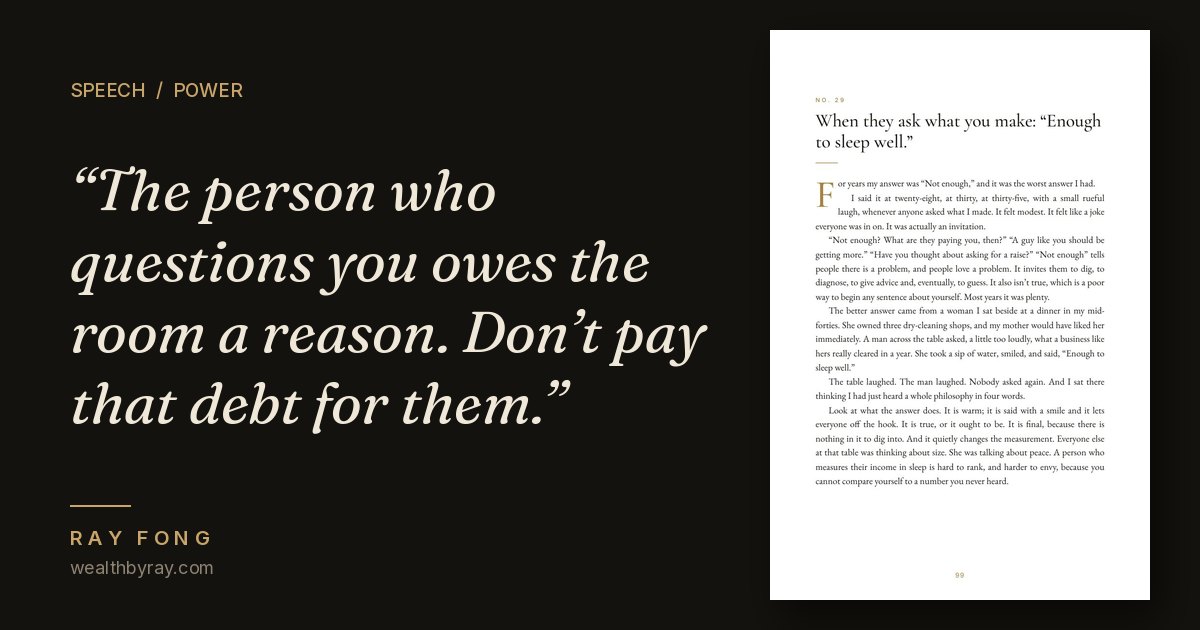
The person who questions you owes the room a reason. Don’t pay that debt for them.
Why defending yourself backfires
When someone challenges you in public, your instinct is to prove yourself. But a long defense sends three signals you don’t want to send: that you were rattled, that their doubt deserved an answer, and that you need the room’s approval. Calm questions send the opposite signals. Research on conversation backs this up: people who ask good follow-up questions are seen as more competent and more likeable, not less (Brooks & John, Harvard Business Review).
Four challenges, and exactly what to say
1. “Are you sure about that?”
Say: “I’m certain. But I’m curious, what makes you doubt it?”
You answer the question in two words, then hand the next move back. Now they have to justify the challenge. If they had a real reason, you hear it. If they didn’t, the room hears that too.
2. “I don’t think you understand.”
Don’t explain yourself. Say: “Walk me through your understanding. I want to see where we see it differently.”
If they truly know something you don’t, you learn it, and that is a win. If they don’t, they have to stand up and show their own thinking, and weak thinking rarely survives being said out loud.
3. “That’s not accurate.”
Say: “Show me what I’m missing.”
Four words, no heat. The burden of proof is now on them, which is where it belonged all along.
4. When they try to brush you off
“Let’s move on, this isn’t important.” Say: “Then this could be a good learning opportunity for both of us. It’ll take a minute.”
You’re not fighting. You’re simply not disappearing.
How you say it matters more than what you say
- Lower your voice, don’t raise it. The calmest person in a disagreement looks like the one with nothing to hide.
- Slow down. Pause one full second before you answer. It reads as confidence, and it stops you from over-explaining.
- Keep your hands still and your eyes steady. Fidgeting tells the room what your words are trying to hide.
- Ask once. One calm question is power. Three in a row is an interrogation.
- Be genuinely curious. Sometimes the challenger is right. Saying “You’re right, thank you, I’ll fix that” in front of everyone builds more credibility than any comeback.
What not to do
- Don’t list your credentials. “I’ve done this for twenty years” sounds like a man who needs you to know it.
- Don’t attack them back. “Well, you clearly don’t know either” turns a question into a fight, and fights make everyone look small.
- Don’t apologize for being sure. “Sorry, I just think…” gives away the ground before anyone asked for it.
People who challenge you in public are counting on you to get defensive. Calm, composed questions do the opposite. You redirect, you stay still, and you make them prove their point. That is how power really works in a room.
The Quiet Rules
Ray’s free book: the exact words for the moments that test your character, and the calm that wins them.
Read it free →Questions people ask
What do you say when someone asks “are you sure about that”?
Answer briefly and hand it back: “I’m certain. What makes you doubt it?” It shows confidence and makes the other person explain their challenge.
How do you respond when someone says “I don’t think you understand”?
Don’t explain yourself. Say “Walk me through your understanding, I want to see where we see it differently.” If they know something you don’t, you learn it; if not, it shows.
How do you handle someone undermining you in a meeting?
Stay calm, keep your voice low and ask one precise question, such as “Show me what I’m missing.” Avoid long defenses, listing credentials or attacking back.
Is it bad to defend yourself when your credibility is questioned?
A short answer is fine; a long defense usually looks rattled. Answering in a few words and asking a calm question keeps your authority.
Watch the reel this post came from →
General education, not financial, legal or tax advice. Rules vary by state and country; speak with a licensed professional about your situation. About Ray.