How to stop arguing with family, and why peace is worth more than being right
 Ray Fong · Updated October 29, 2026
Most family arguments are decided in the first few minutes, so the biggest change is how you start: calmly, about one specific thing, without blame. When an argument is already going, stop trying to win. Say a short, true line like “You might be right; let me think about it,” lower your voice, and change the subject or step away. Save real disagreements for a calm moment with someone who is actually listening.
Ray explains it in under two minutes.
I’m at a stage in my life where I don’t argue anymore.
If you tell me an elephant can fly, I’ll tell you you’re absolutely right. Not because I agree. Because I don’t care enough to spend my afternoon convincing you.
When I was younger, this would have felt like losing. I needed the last word. I’d replay conversations in the car and think of better comebacks. It took me decades to see what all that winning cost me, most of all with my own family.
Being right is expensive
Every argument charges you something: your mood for the rest of the day, your sleep that night, sometimes a relationship. Most of the time, all you get back is the other person’s resentment. Nobody has ever been argued into changing their mind and then thanked you for it.
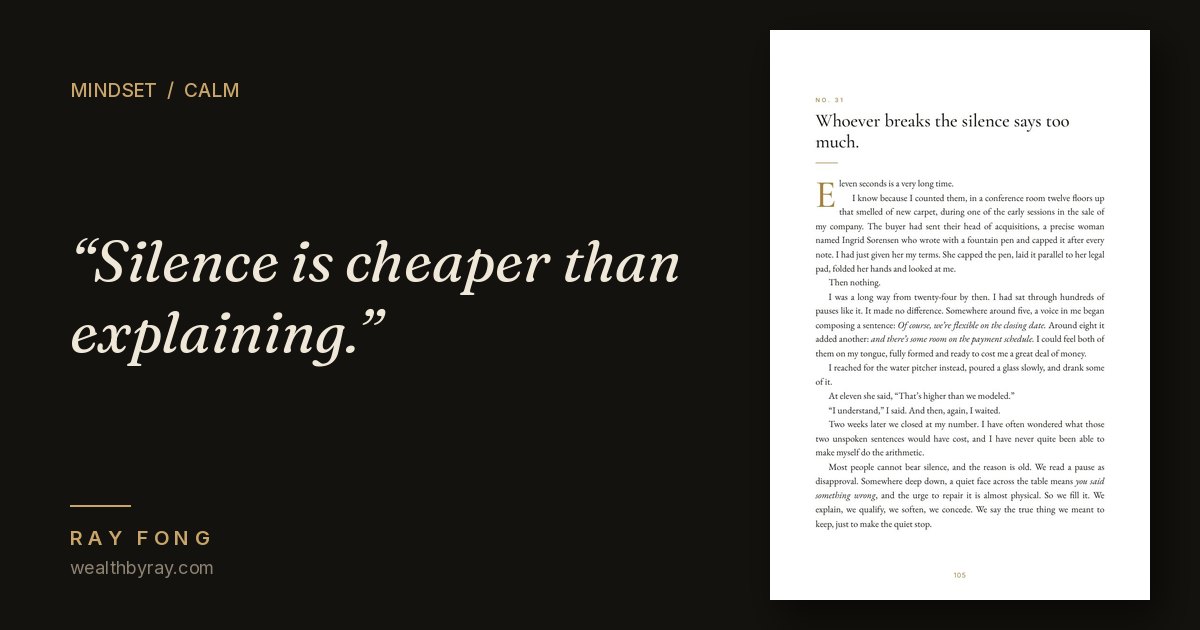
Silence is cheaper than explaining.
The first three minutes decide it
Relationship researchers at the Gottman Institute found they could predict how couples’ conflicts would turn out from the first three minutes of the conversation. Discussions tend to end on the same note they begin. A harsh opening, with blame or sarcasm, almost never becomes a calm ending.
That’s useful well beyond marriage. With a sibling, a parent or a grown child, the way you raise something matters more than the point you’re making:
- Start with yourself, not them. “I felt left out when the plans changed” lands differently from “You always do this.”
- One topic only. The moment old grievances join in, nobody is solving anything.
- Pick the moment. Not at the holiday table, not when someone is tired, never in front of the children.
10 calm lines that end an argument
- “You might be right. Let me think about it.”
- “I see it differently, and that’s okay.”
- “I don’t want to fight about this. Can we come back to it tomorrow?”
- “What would you like me to do?”
- “I hear you. That sounds frustrating.”
- “Let’s agree to disagree, and get dessert.”
- “I need a few minutes. I’ll be back.”
- “I care more about us than about this.”
- “Tell me more about why this matters to you.”
- “I’m not going to discuss this today.”
None of these is surrender. You are not agreeing. You are choosing not to spend the evening on it.
Not every argument is a misunderstanding
Some arguments are honest disagreements, and those are worth having, calmly and with people who are actually listening. But many are something else. They’re invitations to get pulled into someone else’s frustration, a test of whether they can rattle you.
You can decline an invitation. A small smile, “you might be right,” and a change of subject. That isn’t weakness. It’s choosing where your energy goes.
Money is where families fight hardest: loans, inheritances, who paid for what. Two things prevent most of those fights before they begin. A rule you decided in advance (here is how to say no when family asks to borrow money) and a calm, early conversation about what happens later (how to talk to adult children about inheritance).
Calm people make better decisions
This matters well beyond the dinner table. The calm person in a negotiation sees the details the angry person misses. The calm investor doesn’t sell everything on a bad day. The calm parent is the one whose children still call. In business and with money, emotion is expensive and composure pays. And the person who says little is always harder to provoke.
How to practice it
- Ask yourself: will this matter in a week? If not, let it go.
- Notice when you want to win, not understand. That’s the signal to stop talking.
- Say less. Give the short answer. You don’t owe everyone your reasons.
- Lower your voice when theirs rises. It is very hard to keep shouting at someone who is speaking softly.
- Protect your access. Not everyone deserves your energy. Spend it on the people and work that give some back.
Real growth isn’t loud. It isn’t reactive. It looks like a man who smiles, keeps his peace and goes home to a good evening.
The Quiet Rules
Seven rules from Ray’s notebook on calm, money and people. Free.
Read it free →Questions people ask
How do I stop arguing with my family?
Start sensitive conversations gently and about one thing, pick a calm moment, and when a conversation turns into a fight, stop trying to win: use a short line such as “You might be right; let me think about it” and step away or change the subject.
Is it weak to let someone else be right?
No. Choosing not to argue is not agreeing. It is deciding the argument isn’t worth your evening, your sleep or the relationship.
How do I end an argument without giving in?
Name the pause instead of the verdict: “I see it differently, and I don’t want to fight about it. Can we come back to it tomorrow?”
How do I avoid family fights about money?
Decide your rules in advance, such as whether you lend to family, and talk about inheritance plans early and calmly rather than leaving surprises.
Watch the reel this post came from →
General education, not financial, legal or tax advice. Rules vary by state and country; speak with a licensed professional about your situation. About Ray.